🇺🇸
en
Product Design
|
2022 - 2023
My contribution to the creation of new features and game modes in a gaming app

For 1 year and 6 months, I developed projects focused on creating new features and game modes with the goal of increasing user engagement in the app.
During this period, I worked both on improving existing flows and on designing new game modes and features.
Across projects, I led well-structured design processes, guiding initiatives from discovery and solution definition to user validation and the monitoring of production metrics.
UX/UI
Research
Data analysis
The creative process
I led more than 15 projects, ranging from incremental improvements to existing workflows to the creation of new products and game modes.
Continuous discovery
01
I led an ongoing discovery process with users through a direct communication channel, with weekly interactions. This work made it possible to map needs, expectations, and friction points throughout the journey, as well as identify and prioritize solution hypotheses.
Definition and creation of solutions
02
Based on discovery insights and internal data, I structured and designed new features, flows, and screens, as well as enhancements to existing products and the conception of new game modes, always aligning business goals with user needs.
Validation and iteration
03
The solutions were continuously validated through usability tests at different stages of the process, enabling quick adjustments, risk reduction, and evidence-based decision-making.
Measurement and continuous learning
04
After implementation, the solutions were tracked through metrics and A/B tests, with daily monitoring by the team. The insights generated fueled new iterations and discovery cycles.
Final deliveries
A brief overview of the UI deliverables.

Redesign of the assignment flow
I led the redesign of the app’s main conversion flow, with a primary focus on improving usability and increasing engagement among new users.
" width="652px"/></svg>)
Business case
Increase the conversion of our user base as a whole and boost the engagement of new users.
The process
I conducted user interviews, qualitative data analysis (feedback), benchmarking, and heuristic analysis of the legacy flow. These steps were essential for mapping pain points and strategically defining the ideation phase.
Strategic definition
01
More immersive experience
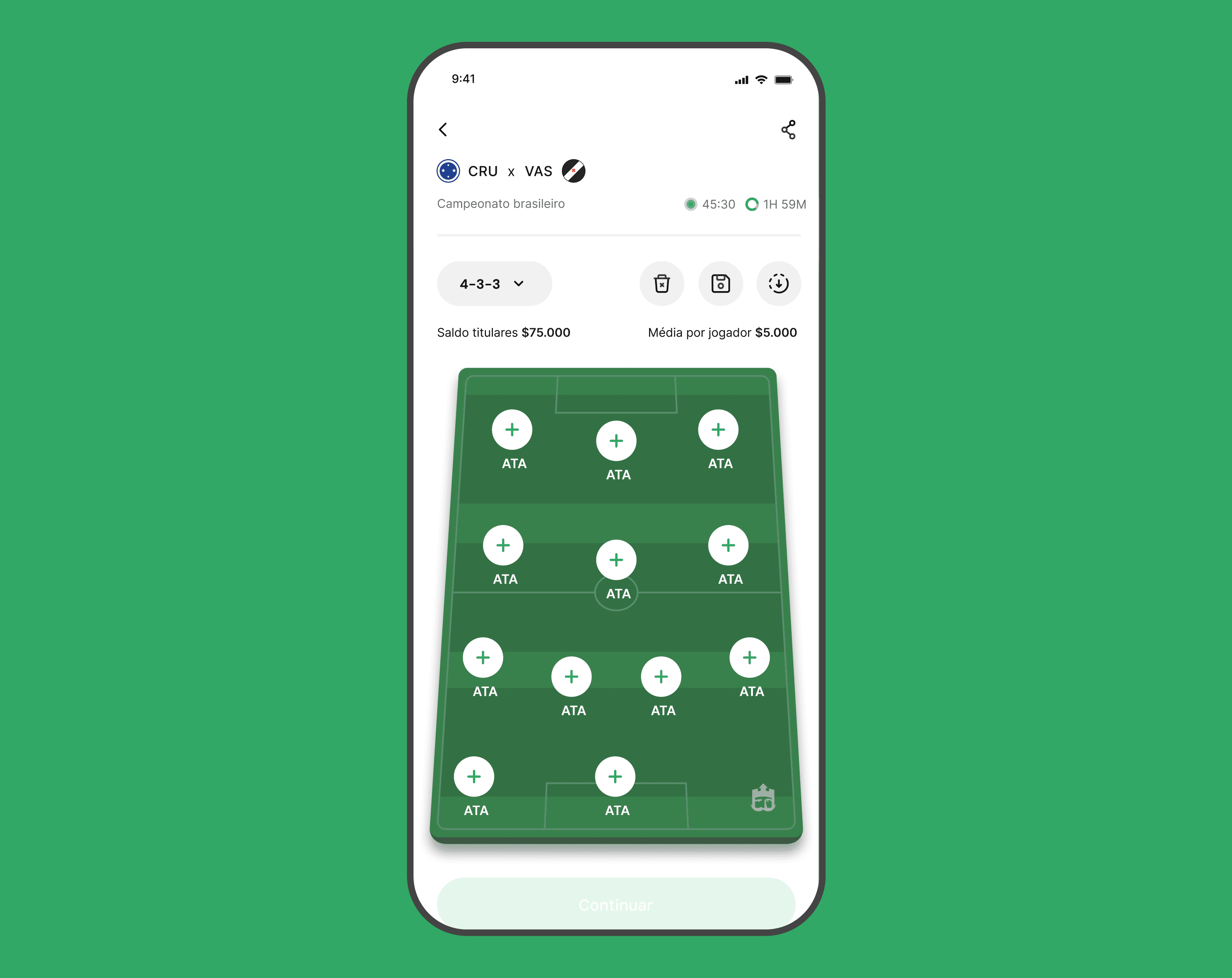
Since it is a fantasy game, the components should have a more engaging visual appeal. The highlight was the "Campinho", where the user spends most of the time following the game.
02
Build trust and create a welcoming experience for the user
In a product that involves financial transactions, we identified that beginner users felt hesitant due to the complexity of the rules and the steep learning curve. The design needed to convey security and clarity.
Solution Hypothesis
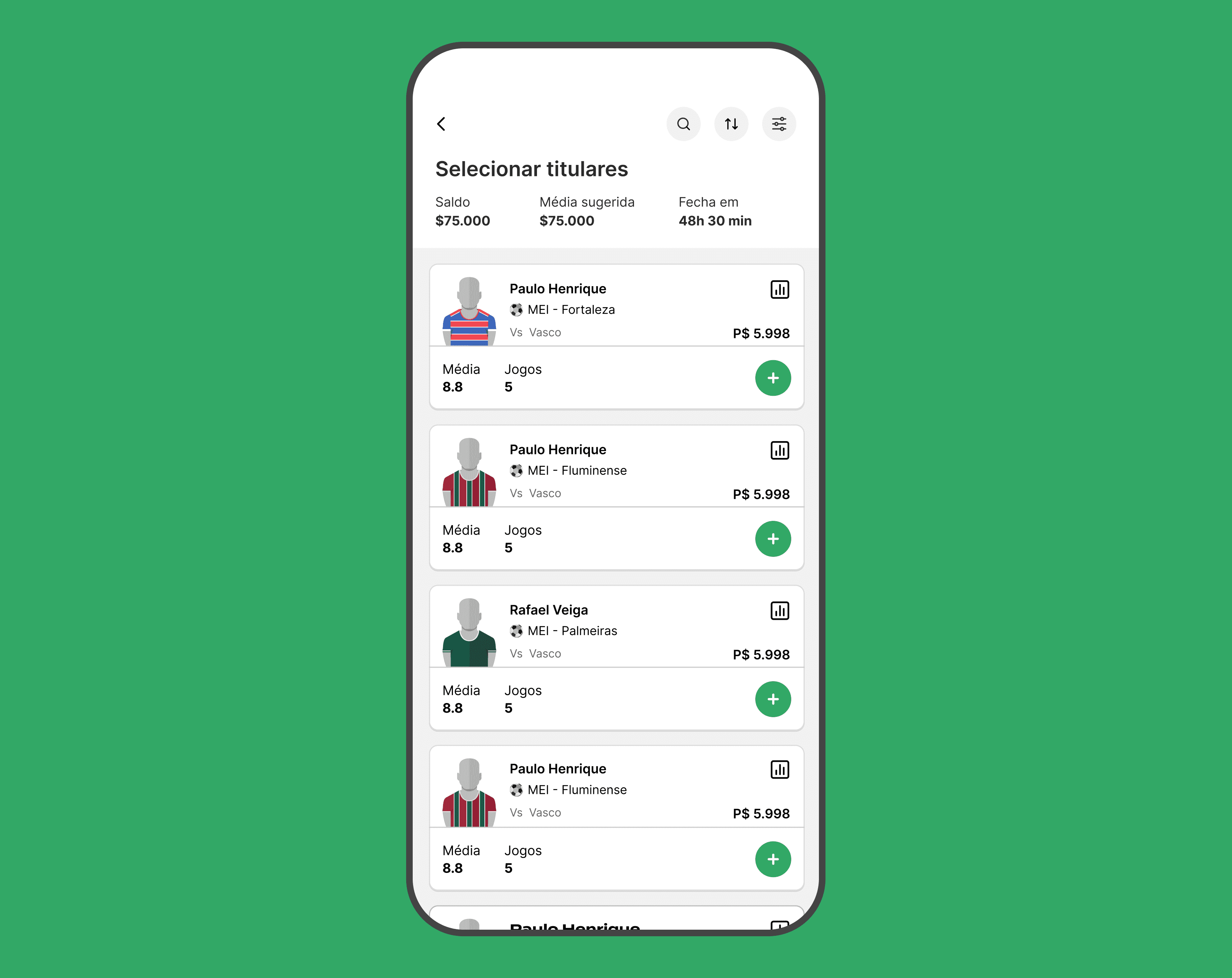
The screens in the escalation flow should create an immersive experience and, at the same time, mitigate understanding barriers for new users, reducing cognitive friction at the top of the funnel.
The Final Result
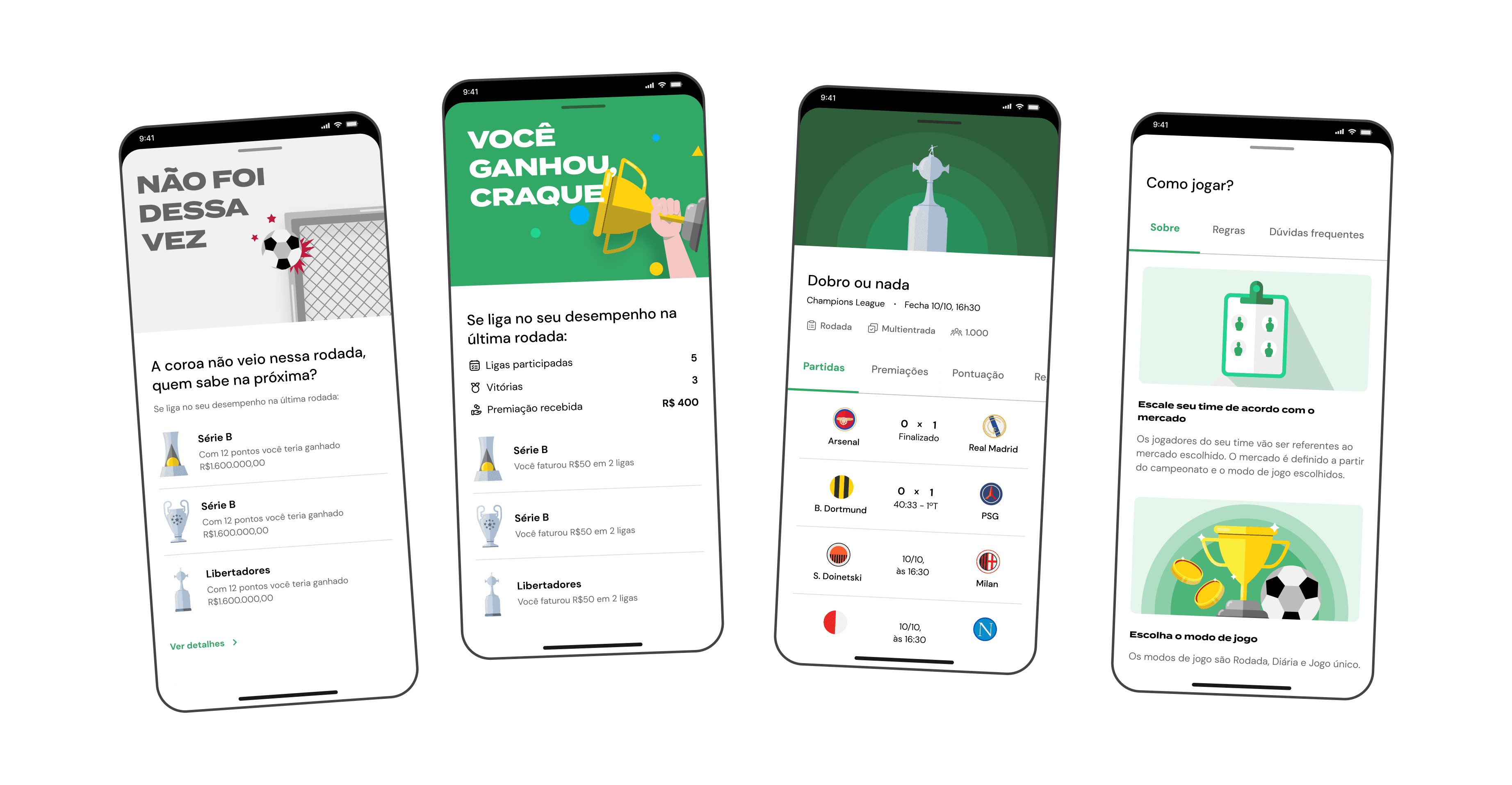
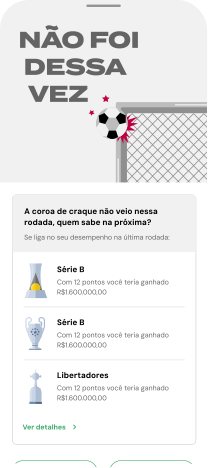
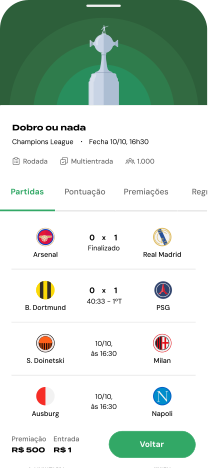
I identified that the areas with the greatest opportunity to apply the strategic definitions were the League Detail screen, Campinho, Market/ Filters, and the Round Completion screen, as they showed a higher churn rate due to the excessive use of technical terms.
The final screens focused on information hierarchy and clarity: elements such as player scoring, balance, bench, and win/loss criteria were highlighted and explained in context. This turned the flow into an educational journey, generating more comfort and confidence for the user to invest in the game.
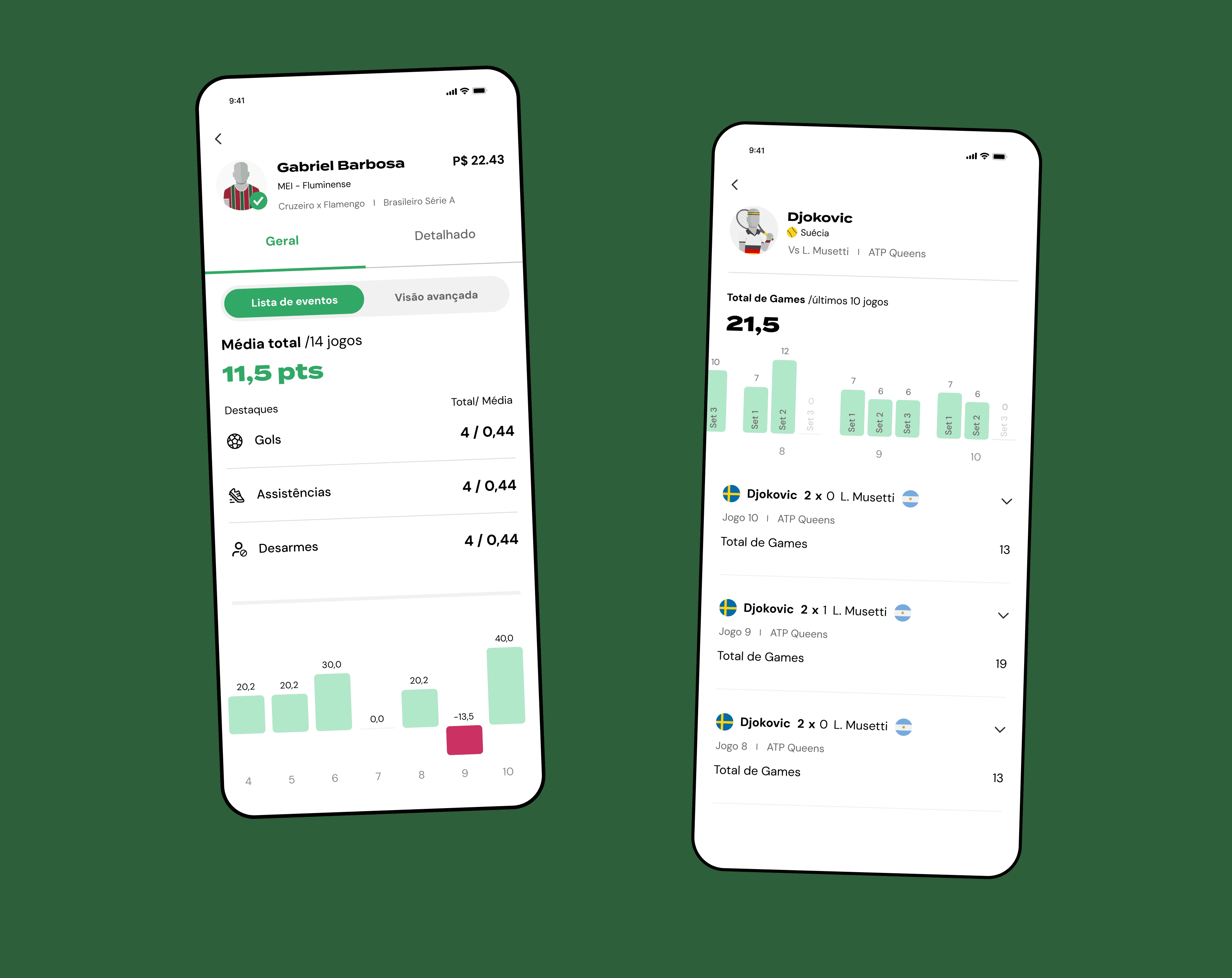
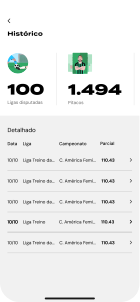
Player statistics
Increased engagement among new users through the creation of a dedicated area for player data and statistics.
Contexto e Business Case
The main goal was to increase the conversion of new users and boost LTV.
The process
Based on qualitative data from different user segments, combined with quantitative data analysis, I identified that much of the friction for new users came from the lack of clear criteria for selecting players, which resulted in underperforming teams, causing frustration and users leaving the platform.
Solution Hypothesis
Creating a dedicated area for statistics relevant to new users would reduce cognitive load. We believed that by providing familiar and simplified data, we would increase user confidence, resulting in greater engagement and retention.
The Final Result
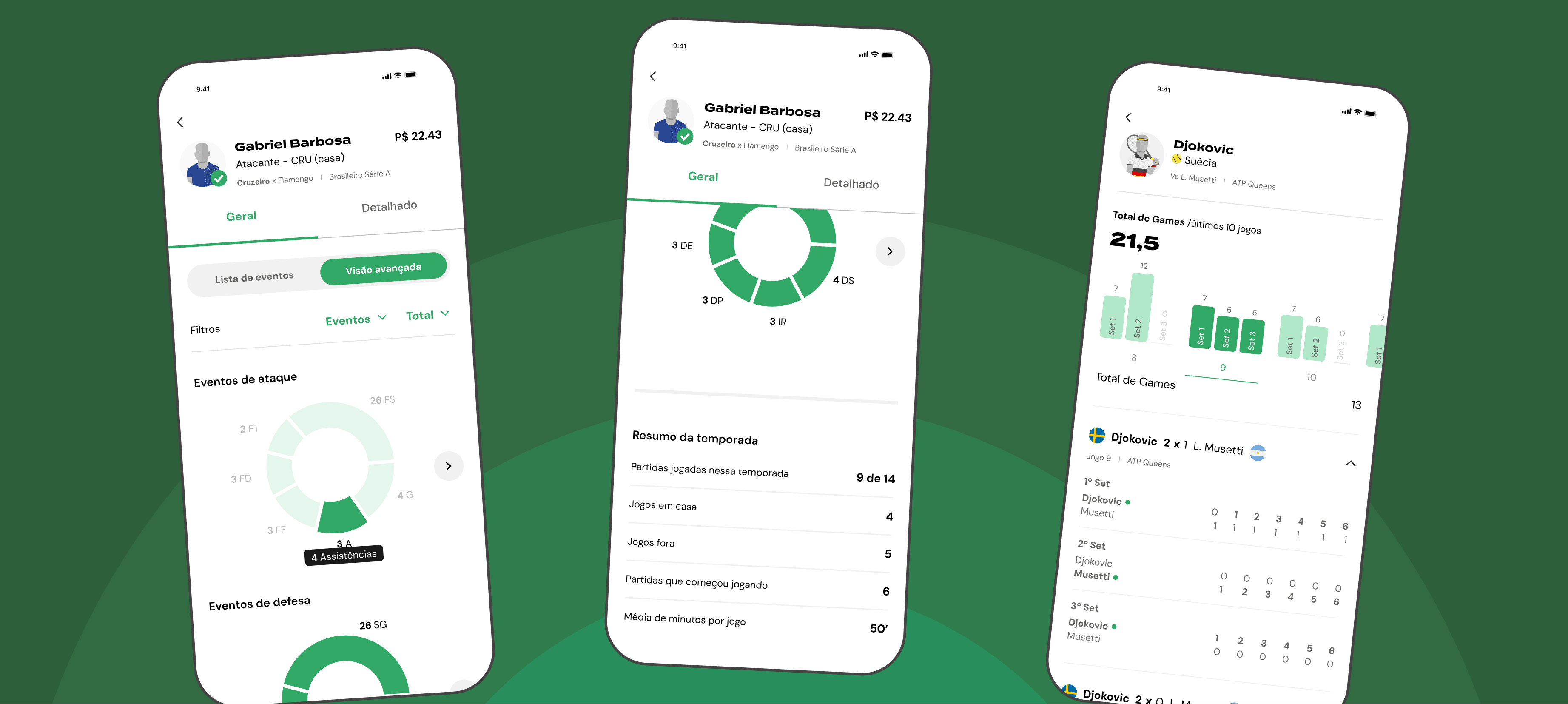
I conducted research to map which indicators were more intuitive for beginner users. With those inputs, I designed an interface that prioritized the information hierarchy:
Macro vs. Micro View: I divided the experience between general data (quick view) and detailed data (deep analysis), allowing the user to navigate according to their level of technical maturity.
Reducing Friction: The clean, straightforward layout made it easier to compare athletes, eliminating overly complex terms.
The impact
+5% conversion
After the launch, we validated the effectiveness of the solution with a 5% increase in new-user conversion, consolidating the statistics area as a fundamental pillar of the scaling journey.
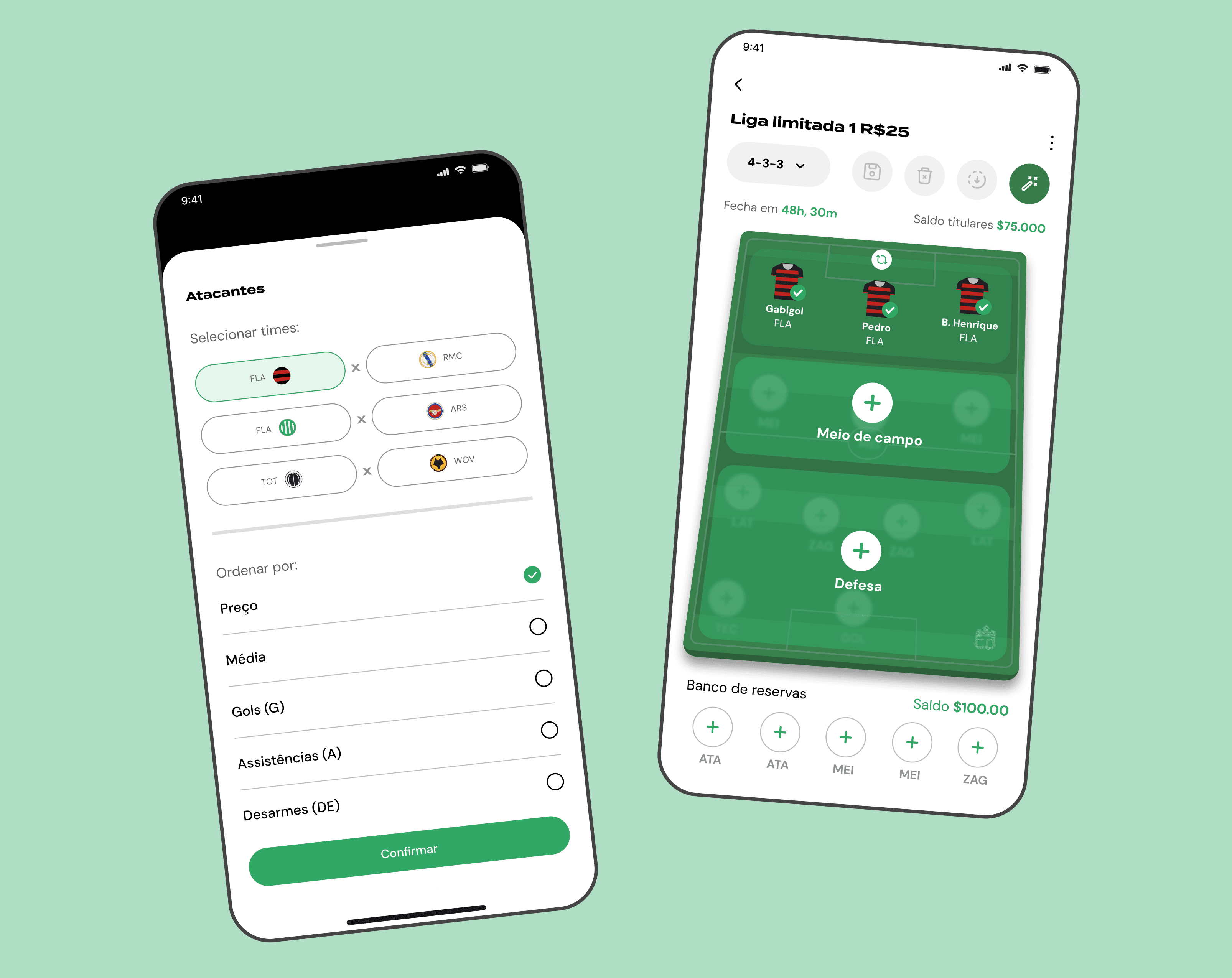
Lineup assistant
I led a project to create a more agile and faster experience for users when scaling a large number of teams.
Contexto e Business Case
The challenge was to reduce friction and the time needed to onboard heavy users (professional users were onboarding dozens of teams per league), where the manual process became exhausting.
The process
With the business objective defined, I conducted a data analysis to map the behavioral patterns of this user segment. The focus was on understanding the logic behind how the teams were assembled.
Solution Hypothesis
Creating a secondary escalation flow that would allow users to carry out the same process—previously manual—with fewer clicks would reduce each team’s escalation time and increase the satisfaction of our most engaged user base.
The Final Result
Data analysis revealed a clear pattern: these users often selected groups of players from the same club for specific areas of the field (defense, midfield, and attack). With this insight, I designed a flow that allows batch sector selection. With a single selection, the user could fill an entire area of the field based on the chosen team, maintaining autonomy for fine adjustments while eliminating unnecessary repetition.
The impact
Operational efficiency
Drastic reduction in the escalation journey, dropping from an average of 22 clicks to just 4.
User experience
Significant increase in satisfaction among the affected user segment.


by moskdesign